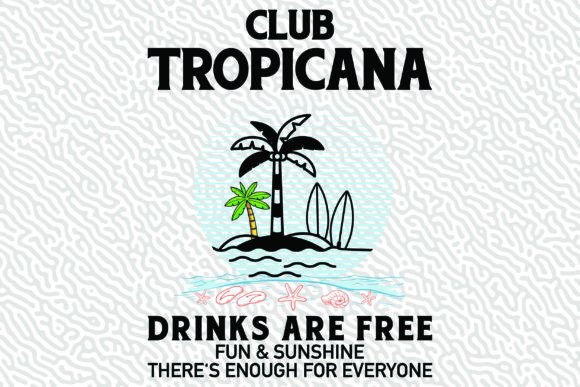
Summer Typography: A Design Review for Embroidery Projects
When a new embroidery design lands on my desk, I look at it through a very practical lens. I’m not just judging it aesthetically; I’m thinking about how it will actually perform when stitched onto fabric for a client’s project or for my own small shop merchandise. Today, I’m considering the Summer Typography Vector Design, and I’ll walk you through my thoughts on its real-world potential.
The Immediate Mood and Visual Personality
First impressions matter, both for us as designers and for our customers. This design, with its “Club Tropicana” phrase, instantly evokes a playful, sunny, and communal vibe. It’s cheerful without being childish. The layout and typography feel relaxed and inclusive—that “There’s Enough For Everyone” tagline adds a wonderfully generous touch. As a graphics file intended for cutting machines, its vector nature means the shapes are clean and defined, which is a fantastic starting point for translating it into an embroidery file. The mood it creates is perfect for projects meant to feel lighthearted, celebratory, or simply full of summer joy.
Where This Design Naturally Belongs
I immediately picture this on a relaxed, cotton-linen blend tote bag for a beach day, or as a central motif on a lightweight, boxy-fit sweatshirt. It would make a fantastic embroidered patch for a denim jacket, a charming accent on a kitchen apron for a summer barbecue host, or a sweet, subtle detail on a baby’s sun hat. Its theme lends itself perfectly to holiday embroidery for gifts—think Father’s Day or a summer birthday—and it has strong potential for small shop product lines, like a series of tea towels or pillow covers for a boutique.
Performance in Real-Life Embroidery Situations
Let’s get into the nitty-gritty. I’m imagining a specific scenario: preparing a custom embroidered tote bag for a client’s beach wedding gift. How would this design translate?
The clean typography from the vector file is a blessing for stitch clarity. Simple, bold letterforms are generally easier to digitize well for machine embroidery design. You’ll likely use a combination of satin stitch for the main lettering and perhaps a fill stitch for any solid background elements if you add them. On a medium-weight canvas tote, the stitches should hold definition nicely. The positive, fun message would absolutely enhance the product value and giftability of the item.
For other applications: on a baby embroidery item like a romper, I’d likely scale it down and place it on the front, ensuring the thread colors are soft and playful. On a cap, the curved surface requires careful digitizing to avoid distortion, but the typography’s relaxed style could adapt well if properly mapped. For commercial embroidery projects, like a run of shirts for a resort cafe, this design offers immediate recognition and a friendly, professional brand consistency.
Visual Appeal and Customer Engagement
This isn’t a hyper-detailed, intricate illustration; it’s a statement. That simplicity is its strength in embroidery. It reads clearly from a distance, which is crucial for custom apparel at a craft fair or in an Etsy listing photo. The handmade presentation becomes about the crisp execution of the letters and the choice of vibrant, summery thread colors. A well-embroidered version of this on a sweatshirt feels approachable and engaging—it invites a smile, which in turn builds customer trust in your craftsmanship.
Caution Zones: Where to Use Carefully
No design is universally perfect, and a practical review must highlight considerations. The main watchpoint here is scale and stitch density.
Small hoop sizes might be challenging if you try to cram the full design into a tiny area. Some lettering details could become lost or muddy. Textured fabrics like thick terry cloth or loose knits could obscure the clean lines. On thin fabric like a classic t-shirt, you’ll need excellent stabilizer to prevent puckering, especially if the design has any solid fill areas. Embroidering on dark fabric requires thoughtful thread color choices—bright, sunny yellows and oranges might need a slight adjustment in hue or value to pop against a navy background.
Also, consider the end use. For products that need frequent washing, like kitchen towels or baby clothes, a densely stitched version might wear faster. A lighter, more open stitch approach could increase longevity.
Practical Designer Notes Before You Stitch
Before you commit this to a final project, here’s my standard pre-flight checklist. Always test the design on scrap fabric first, using the same material and weight as your final project. This reveals issues with stitch density or thread tension. Check thread color contrast against your actual background fabric—don’t just rely on a digital preview.
Since the product details mention SVG files for cutting machines, remember that for embroidery, you’ll need to digitize this vector into a suitable embroidery file format. Confirm your hoop size and inspect small details in your digitized version to ensure they’ll stitch cleanly. It’s also wise to test it in black and white mockups to see how it holds up without color, and compare light and dark fabric backgrounds.
Finally, a crucial step for any craft business: check whether the design works for both personal and commercial projects. The product description provided doesn’t specify licensing details, so it is imperative to confirm licensing before selling finished items or digital products. You must know if you can use this for commercial embroidery on items you sell, or if it’s restricted to personal use only. This protects your business and maintains professionalism.
The Final Verdict for Makers and Entrepreneurs
The Summer Typography Vector Design is a strong, mood-setting graphic with excellent potential for a range of embroidered finished products. Its cheerful theme and clear typography make it a versatile design asset for personalized gifts, seasonal shop merchandise, and custom apparel. Its real value will be unlocked by your skillful digitization and embroidery execution, paying close attention to fabric choice, scale, and thread selection.
For the embroidery designer, small business owner, or hobbyist looking for a design that speaks to summer community and fun, this offers a solid foundation. Approach it with a practical eye, test thoroughly, and clarify its license, and it can become a rewarding part of your embroidery project repertoire, bringing a little sunshine to your handmade work.